Emergent Realities in the Cosmos
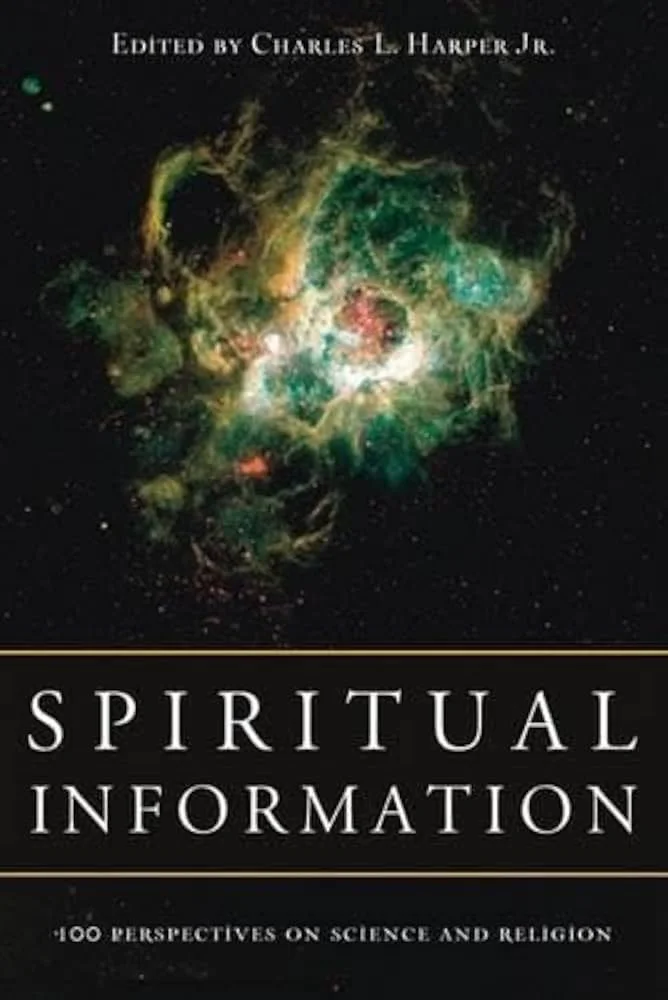
Spiritual Information: 100 Perspectives on Science and Religion, by Charles L. Harper Jr., Templeton Foundation Press, 2005
Essay written by Marcelo Gleiser. Originally published in Spiritual Information: 100 Perspectives on Science and Religion (also selected for “The Best American Science Writing 2003”)
There is a creative tension in the cosmos. We feel it every time we look at Nature, and we feel it within ourselves. It is revealed in the smallest of details, a dewdrop balancing on the tip of a leaf in an early fall morning, the hexagonal symmetry of snowflakes resulting from water's molecular structure and heat dissipation. And it is revealed in large-scale natural phenomena, a lightning strike ripping across the sky during a stormy night, in stars burning their entrails in order to survive the inexorable crush of their own gravity. Our collective history can be told as an effort to represent and make sense of this creative tension, this constant dance of chaos and order that shapes the world.
We have created countless stories, drawings, dances, and rituals in search of meaning, in search of answers. We look at the cosmos with a mixed sense of awe and wonder, of terror and devotion. And we want to know: How can something come from nothing? What is the origin of all things? Can order emerge by itself, without a guiding hand? Is beauty a mere accident of Nature, or is there a deeper meaning to it? Why do we crave beauty? What is it that makes us plant gardens, compose poems and symphonies, create mathematical theorems and equations? Why can't we be content simply by eating, procreating, and sleeping? These are questions that bridge and expand our ways of knowing, our being part of cutting-edge scientific research, philosophical meditation, religious prayer, and artistic output. We have an unquenchable urge to understand who we are and what our place is in this vast universe. In many ways, it is through this search for answers that we define ourselves. By asking, by wanting to know, we define what it means to be human. And, although the answers may vary, just as cultures vary from place to place and time to time, many questions are the same—and remain, to a large extent, unanswered. Modern science has developed a comprehensive narrative describing the emergence of material structures in the universe. Although many of the details and fundamental questions remain open, we now can claim with certitude that the history of the cosmos traces an increasing complexification of its living and nonliving inhabitants, of the hierarchical development of form and function from the simple to the complex. Thus, at very early times, when the universe was extremely hot and dense, matter was in the form of its most basic constituents, the indivisible elementary particles. As the universe expanded and cooled, attractive forces between the different particles made clustering possible: Protons and neutrons emerged from binding quarks, atomic nuclei from binding protons and neutrons, light atoms from binding atomic nuclei and electrons, galaxies from huge collapsing hydrogen clouds, stars from smaller hydrogen-rich clouds within these galaxies, until, eventually, living beings emerged in at least one of the billions of solar systems spread across the cosmos.
The scientific account describing the emergence of complex material structures has enjoyed enormous success. Cosmology is now a data-driven branch of physics, as opposed to even two decades ago. However, in spite of this success, or perhaps because of it, several fundamental questions have surfaced that defy present knowledge. Among the most fascinating of these questions are those that address origins: the origin of the cosmos, the origin of life, and the origin of the mind. The answers to these questions, even if currently unknown, are all related to the issue of emergence: How is it that structures self-organize to the point of generating extremely sophisticated complex behavior? Be it a surging cosmos out of a primordial soup of cosmoids, a simple living being made of millions of organic macromolecules, or a thinking being capable of wondering about his or her own origins and of pondering moral dilemmas, the emergence of complexity encompasses some of the most awesome and least understood natural phenomena.
These three origin questions may be compressed into a single one: "How come us?" This is the kind of exasperating question that makes most scientists throw in the towel. A common answer is: "Who cares?" After all, there may not be a reason at all; we may be here simply as the result of a random sequence of accidents on the right-size planet, with the right amount of water, at the right distance from a moderate-size star, and so on. "The Universe may be full of Earth-like planets with other forms of intelligent life," the argument proceeds. Indeed, it is quite possible that the universe is filled with Earth-like planets, some of them with similar amounts of water and Earth-like atmospheric compositions. Possibly, several will also have some form of living beings. If Earth is a demonstrative example, life is very resilient and can adapt to extremely adverse circumstances. But intelligent life is a whole other story. (By "intelligent," I mean a species capable of self-reflection and with the ability for abstract thinking.) Evolutionary arguments claiming that natural selection necessarily leads to intelligence are flawed. Consider the history of life in the only place we actually know it exists, Earth. The dinosaurs were here for about 150 million years and showed no signs of decline or of intelligence. Intelligence may be a sufficient condition for dominating the food chain, but it is not a necessary one. It took a devastating collision with a ten-kilometer-wide asteroid 65 million years ago to decimate the dinosaurs, together with 40 percent of all life forms on earth. Ironically, the mammals, which up to that point were pretty much insignificant, survived and flourished in the wake of this cataclysm. In a very real sense, we are here because of this catastrophic collision.
Life is an experiment in emergent complexity: We may know what the ingredients are, but we cannot predict its detailed outcome. (And we still cannot repeat it in the laboratory.) Intelligent life is certainly a very rare outcome. This goes against everything we have learned over the last four hundred years of modern science—that the more we know about the universe, the less unique we seem to be. True, we live among billions of other galaxies in the visible universe, each of them with billions of stars. True, the matter that makes up people and stars is subdominant; most of the matter that permeates the cosmos is not made of protons and electrons, but of something else that does not shine like the matter making up stars. Our location in the cosmos and our material composition are not of great cosmic relevance or particularly special. But our minds are. As far as we know, there aren't any others out there. If there were, chances are we would have been visited by now. Our galaxy, being about one hundred thousand light-years across and 12 billion years old, could have been traversed countless times by other intelligent civilizations. But it hasn't—unless, of course, aliens have been here long before we have and didn't leave any clues, or do not want to make contact. (Taking the first 2 billion years off for good measure, and assuming intelligent civilizations can travel at least at one-tenth the speed of light, gives a total of ten thousand galaxy crossings in the last 10 billion years. Either we have been purposely ignored, or we are really inconspicuous.) Given the unknowns (how can we presume to understand an alien psyche if we don't even understand our own?), we should keep an open mind, repeating, as suggested Carl Sagan, that "absence of evidence is not evidence of absence." (Or, maybe the aliens are just very shy.) If, indeed, we are a rare event, we must be ready to take on an enormous responsibility: We must preserve our legacy, learning how to survive in spite of ourselves. Humans are capable of the most wonderful creations and the most horrendous crimes. It is often very convenient to dream of archetypical aliens, wise and allknowing, who will inspire and educate us before it's too late. Those aliens are not so different from the saints and prophets of many religions who bring us hope and direction. But if we are alone, we must learn to save ourselves following our own guidance and acquired wisdom. It is here that a blending of science and religious ethics can be profoundly useful. We can start by extending the New Testament maxim "Do unto others as you would have them do unto you" to all known and unknown living beings, here and across the cosmos.
Then, we must learn from the way Nature operates. There is a single principle behind all existing order in Nature, an all-embracing urge to exist and to bind what manifests itself at all levels, from the racing world of subatomic particles to the edges of the observable universe. It also manifests itself in our lives and in our history. Humans cannot escape this alliance with the rest of the cosmos. Our tensions are part of this universal trend, our creations and destructions part of the same rhythms that permeate the universe. Through them, we search for transcendence, for a reality deeper and more permanent than our own. However, we have distanced ourselves from Nature and have become wasteful. Our wastefulness is reflected in the way we treat our planet and ourselves. It is a cancer that grows and overwhelms what lives and what doesn't.
The laws of physics dictate that inanimate systems never use more energy than they have to, never choose a more costly path to achieve the same end result. We must learn from Nature's simple elegance, from its aesthetic and economical commitment to functionality and form. We must look beyond our immediate needs and greed, reintegrating ourselves into a physical reality that transcends political and social boundaries. Perhaps then we will start to respect our differences, to learn from those who believe, live, and look differently than we do. And we don't have a minute to waste.